Prevention as a key to trust according to Israel García, Fraud Manager in Santalucía
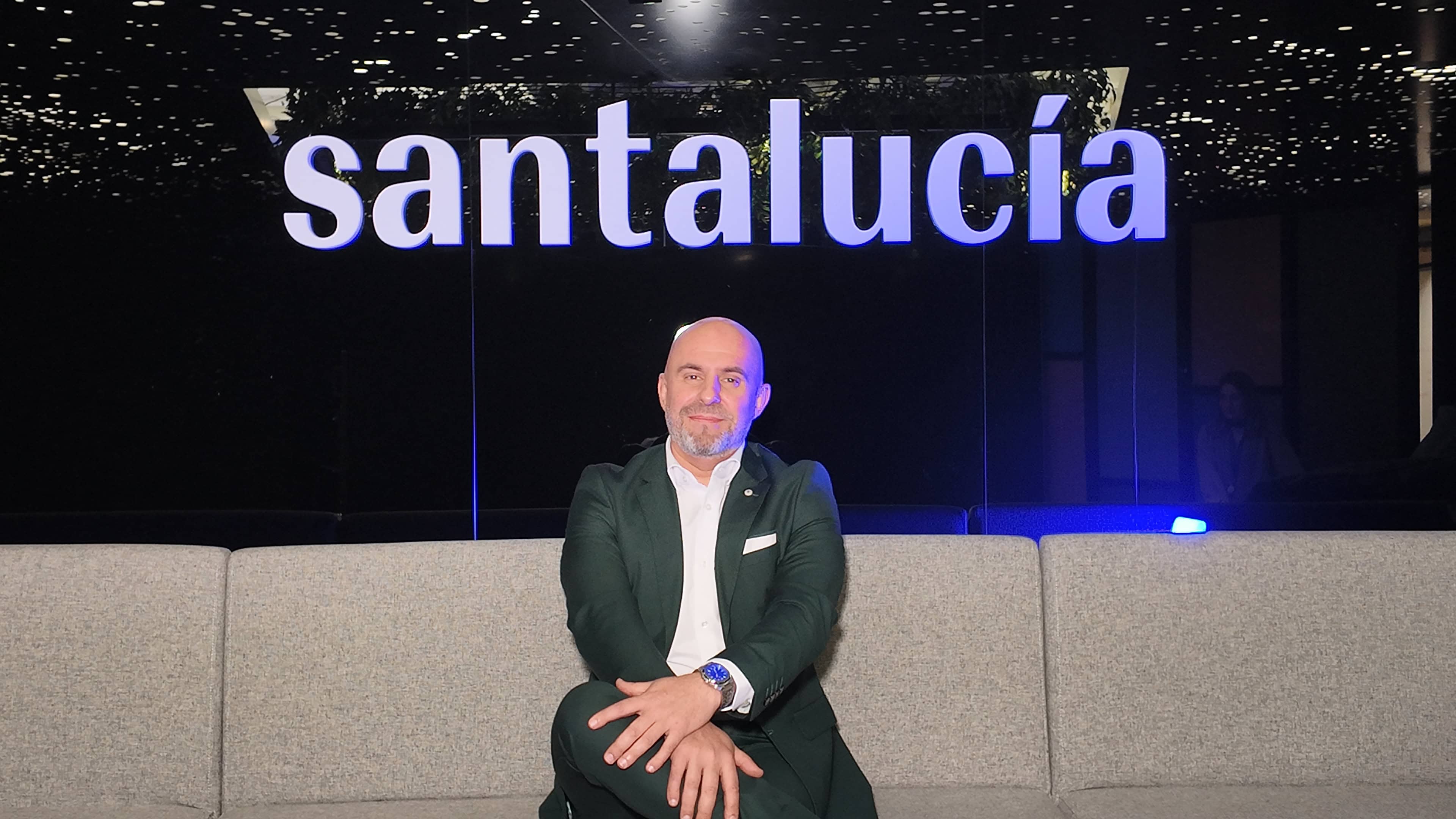
One day after Digital Security Day, the conversation about fraud and cybersecurity is still very present, perhaps because it is no longer an issue linked to a specific date, but rather a daily reality that crosses people, companies and institutions. In this context, today we interviewed Israel García, fraud prevention manager in Santalucía, to understand how digital fraud is evolving and what role organizations must assume in an increasingly complex environment.
The need for real digital culturization
From the beginning of the conversation, Israel focuses on an idea that runs through its entire discourse. The need for a true digital culturization of the population. “It's super important that there is a solid base of digital knowledge in society”, explains, because the constant use of technology requires more than intuition or experience. It requires judgment, understanding of the risk and the ability to identify anomalous situations before they become a real problem.
In this process, the insurance sector occupies a particularly important position, both because of its reach and because of the ongoing relationship it maintains with millions of people. “Insurers play a key role in raising customer awareness”, points out Israel, insisting that this work cannot be limited to specific actions. Generating clear campaigns, sustained over time and conceived as a natural part of the regular relationship with the customer is part of a responsibility that goes beyond incident management.
This approach connects directly with an ethical vision of the business. Protecting involves anticipating, accompanying and helping to understand an increasingly complex environment. “It's an obligation to our customers and to society”, summarize. And it's not a task that should fall solely on companies. Public administrations also play a decisive role, promoting educational programs that address the Cybersecurity as a basic competence and that they reach all ages, from early stages to the senior population.
Fraud as a systemic risk
The current context explains why fraud has ceased to be a one-off risk and has become a systematic threat affecting all sectors. In the insurance sector, it also acquires a particularly sensitive dimension. “Every fraud that goes undetected puts the sustainability of the model at risk”, Israel points out, stressing that the impact is not limited to technical balance. It also has an impact on the costs borne by customers and, above all, on the Trust, an essential asset for any long-term relationship.
For this reason, fraud prevention can no longer be approached from a purely technical perspective. “Today it forms part of the core of corporate governance”, affirms. It talks about strategic decisions, processes and organizational culture. Protecting customers and doing things right not only responds to an ethical obligation, but it also constitutes a clear commitment to a sustainable business, capable of generating trust and strengthening relationships over time.
Technology becomes a key ally within this approach. The use of advanced analytics, investment in responsible artificial intelligence and the reinforcement of specialized equipment make it possible to detect complex patterns and act with greater precision. “Our goal is to clearly and quickly identify what is anomalous”, explains Israel, stressing that this approach reduces the impact of fraud and, at the same time, streamlines the management of legitimate claims.
The benefit is twofold. On the one hand, it improves internal efficiency and responsiveness. On the other hand, it has a direct effect on the customer experience. “A well-designed prevention protects the customer and improves their experience”, points out. When it works, it does so almost invisibly, providing frictionless security and reinforcing the sense of care.
Evolution of fraud: from improvised attacks to professionalized networks
When analyzing the evolution of digital scams, the change is evident. “We have gone from opportunistic attacks to a clearly industrialized and professionalized model”, Israel affirms. Criminal organizations today operate like real companies, with hierarchical structures, specialized functions and business models based on fraud as a service. They invest in research and development and intensively use emerging technologies such as artificial intelligence or deepfakes.
This scenario expands the scope of Risk and redefines the most exposed groups. Young people, the elderly, SMEs, minors and vulnerable groups become priority targets of increasingly sophisticated, emotional and personalized fraud. Technology acts as an accelerator, although the real point of entry is still human.
“Current Social Engineering Exploits Emotions”, Warns Israel. Urgency, fear, trust or ignorance are used as levers to induce quick decisions. Techniques such as advanced phishing or identity theft, supported by data and artificial intelligence, achieve very high levels of credibility.
A comprehensive and coordinated response
Faced with this scenario, the answer requires a comprehensive vision in which technology, governance and culture advance in a coordinated manner. Fraud prevention is no longer limited to reacting to the incident. It involves anticipating, educating and designing systems that protect while always keeping people at the center.
Basically, as Israel points out, the fight against fraud speaks of something broader. How organizations understand their role in a digitalized society, how trust is built in complex environments and how ethics, coherently integrated into strategy, becomes a real engine of long-term sustainability.