Keys to really understanding the different stages of funding a startup

Why are funding rounds important in a startup?
When it comes to startups, funding rounds often appear as if they were a milestone in and of themselves. Concepts such as pre-seed, seed, Series A or Series B are repeated in conversations, headlines and presentations, sometimes without it being completely clear what each stage involves or why a startup reaches one or the other.
Understanding funding rounds helps to bring order and reduce noise. It is wrong to consider them as an ultimate goal or an obligatory ritual. They work like a photograph of the moment in which a project is found and of what it needs to move forward.
Before you start: own resources as a first investment
Understand the problem and the customer
Many startups start with their own resources and with the support of the closest environment. Time, personal savings or informal collaboration make it possible to give shape to a first idea, explore the problem and see if it is worth moving forward.
In this phase, the focus is on understanding well what you want to solve and for whom. There is not yet a solid business structure or a clearly validated proposal. The important thing is to learn quickly and with flexibility.
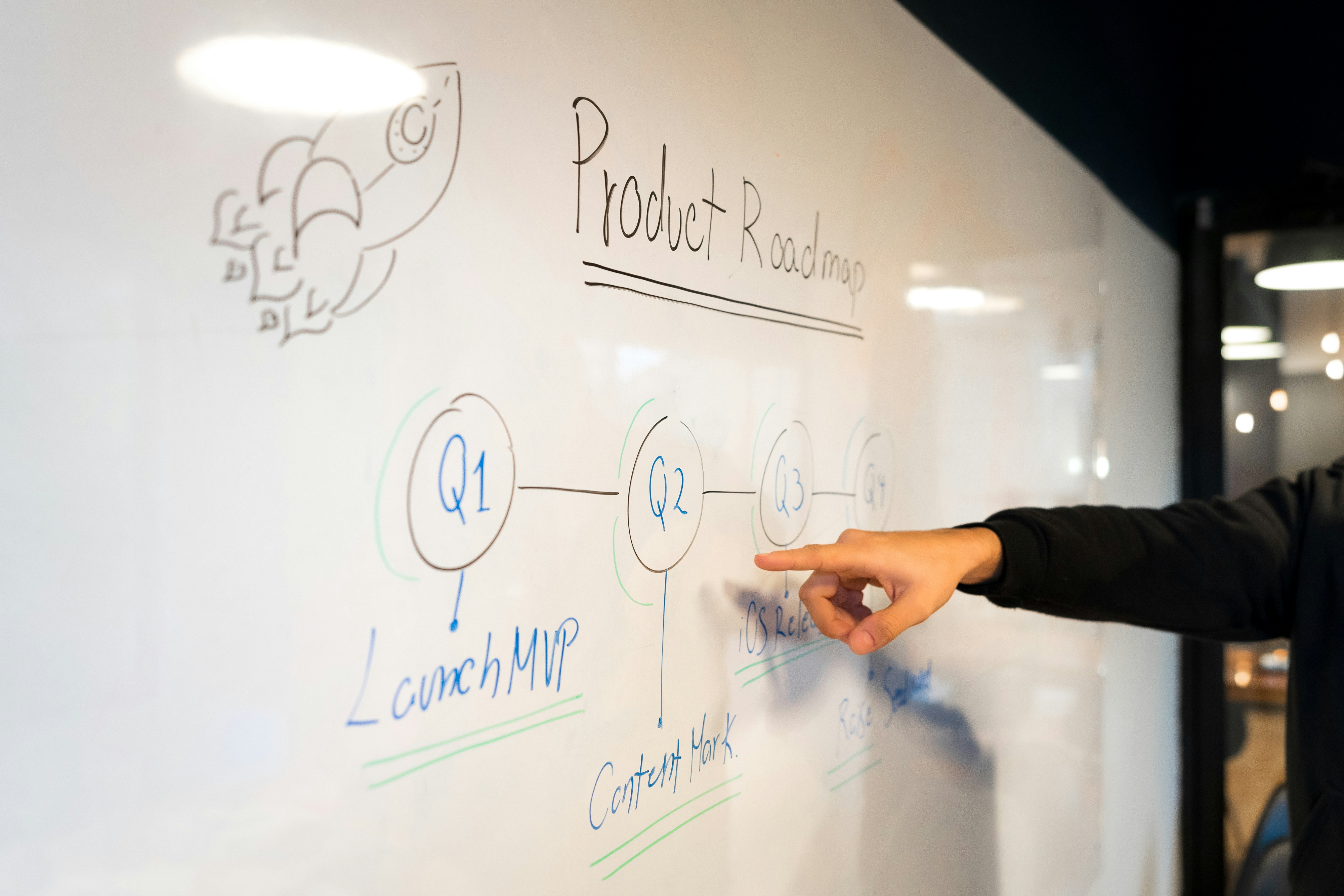
Pre-seed phase: when the idea begins to take shape
Prototypes, hypotheses and first validations
La Pre-seed phase It usually comes when the project starts to be ordered. There is a more defined idea, a first team and, in some cases, a prototype or an initial proof of concept.
Main objective of pre-seed funding
The funding right now is intended to turn an intuition into something more tangible. It helps to deepen product development, to validate key hypotheses and to lay the foundations of the project. We are not trying to climb yet, but to verify that the chosen path makes sense.
Ronda Seed: the project is starting to move
Market validation and first customers
The seed round usually marks a turning point. The product or service already works in a basic way, there is initial market validation and the team begins to structure itself more clearly.
Team building and sustainable growth
Here, funding is aimed at growing wisely. It reinforces the Development, key profiles are incorporated and work is being done to reach more customers. The startup ceases to be just a promise and begins to demonstrate that it can be sustained and evolve.
Series A: Model Consolidation and Scaling
Scale with structure
The A Series usually appears when the model has already been tested and the focus is shifted to structured growth. The product has found its place, the market responds and the challenge is to scale in an orderly manner.
Strengthening processes and operations
The investment at this stage is aimed at expanding operations, improving processes and strengthening the organization. The startup leaves behind the experimental phase and enters a phase of consolidation in which execution takes on a central role.
Later series: expansion, internationalization and diversification
When it makes sense to lift Series B, C or higher
The following series usually focus on expanding the market, internationalizing or diversifying lines of business. Not all startups reach this point nor do all of them need it. In these phases, funding responds to more complex strategies and to larger-scale growth decisions. The project already has a clear trajectory and with more defined objectives in the medium and long term.
Beyond the name: understanding the real moment of the project
Why not all startups follow the same path
Not all startups go through all the stages nor do they do it in the same order. Each project follows its own pace and responds to different needs. Raising investment only reflects a specific moment along the way. Understanding what each stage means helps you make better decisions and avoid useless comparisons. Funding works best when it accompanies the project and not when it forces it to go faster than it can sustain.