6 key lessons for starting a business and turning an idea into a startup

Entrepreneurship involves identifying opportunities, validating ideas, adapting to change, and learning to manage uncertainty. To mark Global Entrepreneurship Week, we are reviewing six fundamental lessons for those looking to launch a startup or develop an innovative project.
Every entrepreneurial project begins in a different way. Some are born from a personal need, others from a market opportunity, and many arise from observing a daily problem that still lacks an adequate solution.
But between having an idea and turning it into a viable project lies a whole process of learning. Entrepreneurship requires making decisions, testing hypotheses, listening to users, and adapting to constantly changing situations.
To mark Global Entrepreneurship Week, which takes place from November 16 to 22, 2026, we want to focus on some of the lessons that accompany those who decide to launch their own ideas. Because entrepreneurship is also about developing skills that help us face new challenges and find opportunities where we previously only saw problems.
Global Entrepreneurship Week has been celebrated since 2008 and is driven by the Global Entrepreneurship Network. In 2025, it held its largest edition to date, with more than 50,000 activities across 200 countries and territories, and more than 10 million people participate in it every year.
1. The best opportunities start by understanding a problem
One of the first lessons of entrepreneurship is learning to observe. Before thinking about a product, an application, or a business model, it is best to understand what people need and what difficulties they encounter in their daily lives.
Identifying an opportunity involves listening, asking questions, and analyzing whether there is a problem worth solving. The better we understand that need, the more likely we are to develop a useful proposal.
The data confirms this. In an analysis by CB Insights of 111 startups that shut down, a lack of market need appeared in 35% of cases and was the second most cited cause, behind only running out of cash (38%).
Consider, for example, an elderly person who needs help with certain digital tasks. A possible solution could be a simpler application, an assistance service, or a tool that facilitates communication with their family. The starting point is to understand the specific difficulty we want to solve.
For those taking their first steps, one question can help guide this process: what problem am I trying to solve, and for whom?
2. Validating an idea is just as important as having it
When we believe we have found a good idea, it is tempting to start developing it immediately. However, one of the most important lessons is to verify whether our proposal truly meets the needs of its potential users.
Validation allows us to test our hypotheses before investing too much time and resources. We can do this through interviews, surveys, user testing, or prototypes that help us gauge their initial impressions.
One of the most widely used tools is the Minimum Viable Product (MVP), a first version of a solution that incorporates the essential features to gather information and continue improving it. The concept was popularized by the Lean Startup methodology, which Eric Ries formulated in 2011 in his book The Lean Startup.
For example, before developing a full platform to connect people looking to share housing, we could test the service with a small group of users to see what their needs are, what difficulties they encounter, and which aspects they value most.
In our blog, we explain why it is important to define a Minimum Viable Product and how it can help us move forward in the early stages of a project.
3. Learning to adapt is part of the journey
An idea can evolve significantly from its initial concept. User needs change, new technologies emerge, and the market may respond differently than we had anticipated.
That is why the ability to adapt is one of the most valuable skills for entrepreneurship. Listening to customer feedback, analyzing results, and being willing to make changes allows you to improve a proposal and find new opportunities.
Imagine a startup developing a tool to organize family tasks. After its first tests, it discovers that its users especially value features that allow for delegating responsibilities and anticipating unexpected events. That learning can help the team rethink their priorities and focus their efforts on the most useful features.
Adapting requires maintaining an open mind, reviewing our decisions, and understanding that every test can provide valuable information for the future of the project.
4. Managing uncertainty can also be learned
Entrepreneurship involves making decisions without always having all the information. From choosing a business model to setting prices, seeking funding, or deciding when to launch a product, each stage raises new questions.
Uncertainty is part of the process, but we can learn to manage it through clear goals, informed decisions, and continuous evaluation of results.
It is not an isolated feeling. According to the GEM Spain 2025-2026 Report, 55% of the population considers fear of failure a barrier to entrepreneurship. Learning to manage uncertainty helps turn that fear into more informed decisions.
One way to do this is to break big challenges down into small steps. Instead of trying to solve everything from the start, we can identify what we need to test first, what resources we have available, and what results will help us decide how to proceed.
It is also important to learn how to prioritize. A team's time, budget, and capabilities are usually limited, especially during the early stages. Focusing efforts on the decisions that most influence the project's development helps you move forward with better judgment.
5. A good team can take an idea much further
Behind every entrepreneurial project are people who bring different experiences, skills, and ways of thinking. Bringing together complementary profiles allows you to approach challenges from different perspectives and find more comprehensive solutions.
A team may need technological, commercial, financial, or communication skills, but also soft skills like listening, collaboration, and problem-solving.
The team also influences the outcome. In the same CB Insights analysis, 14% of startups that shut down cited not having the right team as a cause, and 7% mentioned disagreements within the team or with investors.
Learning to work with people who think differently is part of the entrepreneurial process itself. Comparing opinions, questioning approaches, and combining ideas can help us discover possibilities that might have gone unnoticed individually.
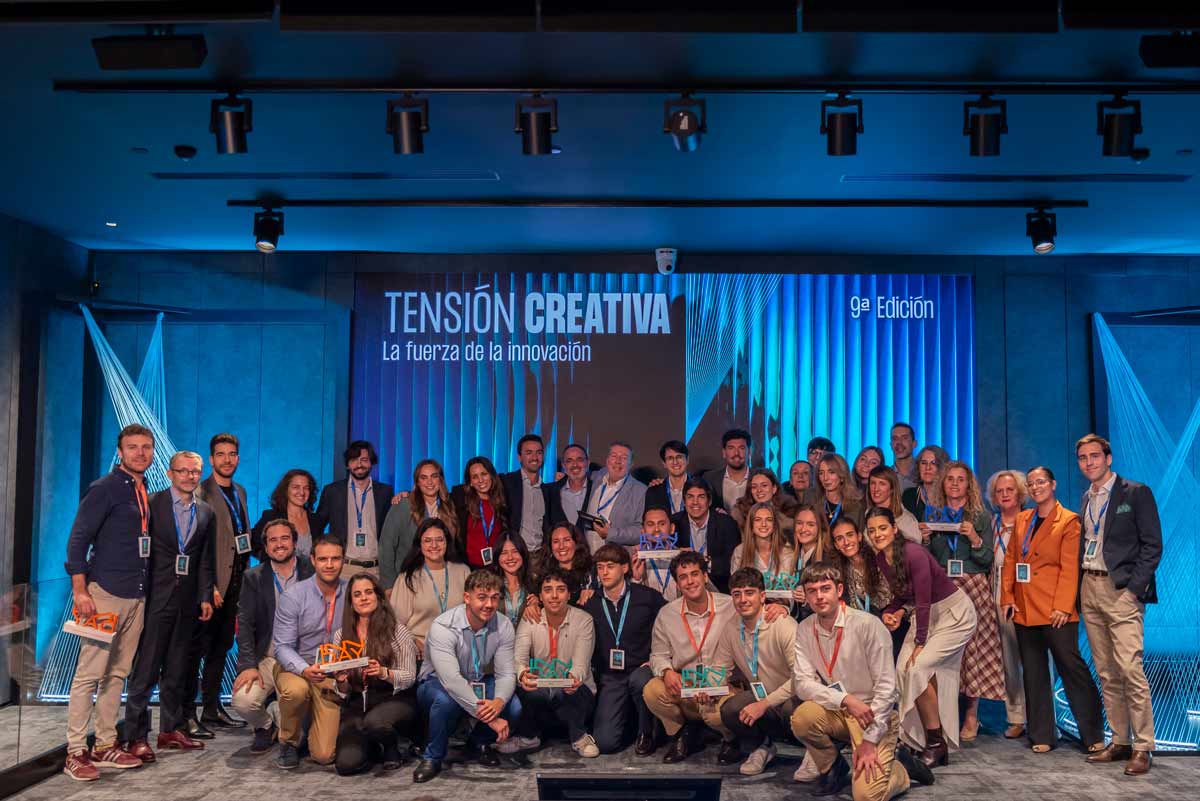
This was precisely one of the key themes at INNDAY 2026, where university students, startups, and intrapreneurs shared their projects under the concept of creative tension, highlighting the value of bringing different perspectives together to drive innovation.
6. Entrepreneurship also means knowing how to surround yourself with support
Launching a project can be complex, especially when facing certain challenges for the first time. Having a support network provides access to new perspectives, allows for the sharing of experiences, and helps find the resources needed to keep moving forward.
Mentors, fellow entrepreneurs, universities, investors, and organizations that foster innovation can play a significant role in this journey.
In Spain, this support also has a legal framework. The Law 28/2022 of December 21 on the Promotion of the Startup Ecosystem, known as the Startup Law, includes tax incentives and administrative facilities for emerging companies accredited by ENISA.
Participating in professional gatherings, training programs, or open innovation initiatives also allows you to learn about other projects, identify potential collaborators, and build relationships that can prove useful in the long term.
In this sense, the connection between startups and established organizations can open up opportunities to explore solutions and test them in real business environments. At Santalucía Impulsa, we have addressed the value of open innovation and collaboration between companies and startups as a way to develop new ideas and tackle shared challenges.
In the case of Santalucía Impulsa, the program has analyzed more than 2,300 projects and has accelerated or incubated 90 initiatives, which have secured over 28 million euros in funding, according to data published on their website.
Learning continues with every new project
Global Entrepreneurship Week is an opportunity to recognize those who choose to explore new ideas, take on challenges, and work to turn them into value-adding solutions.
Every project has its own journey, but they all share the importance of learning throughout the process. Identifying needs, validating proposals, adapting to change, managing uncertainty, and building trusting relationships are skills that are developed through experience.
At Santalucía Impulsa, we work to bring innovation and entrepreneurship closer to university students, professionals, and startups, promoting spaces where ideas can be developed, tested, and evolved.
Because entrepreneurship is also about learning to look at problems from new perspectives, discovering opportunities, and finding the right tools and people to keep moving forward.